
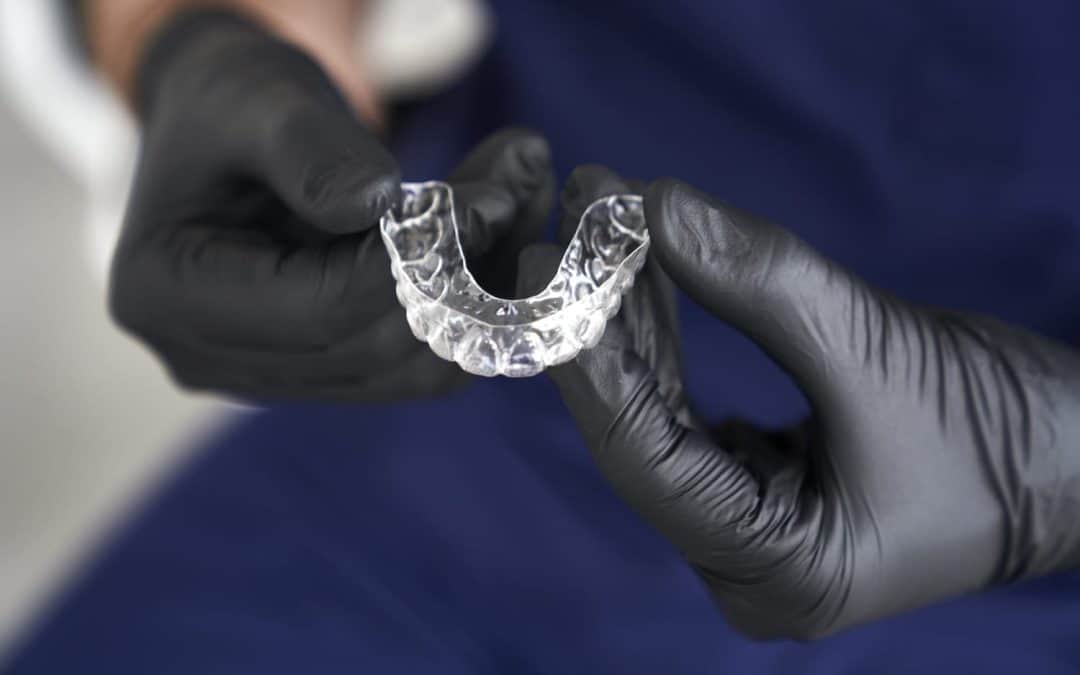
A split lip or damaged tooth can happen in seconds during sport. A stray ball, accidental elbow, tackle or fall may be enough to cause an injury that requires dental treatment. Custom fitted mouthguards provide a protective layer around the teeth while being made to match the individual shape of the wearer’s mouth. For adults and children involved in contact or higher-risk sports, the right fit can make a considerable difference to comfort, retention and willingness to wear a mouthguard throughout a game or training session.
What Is a Custom Fitted Mouthguard?
A custom fitted mouthguard is a removable dental appliance made specifically for one person’s teeth and mouth. Rather than being manufactured in a general size, it is produced using an impression or digital record of the wearer’s teeth.
The resulting mouthguard follows the contours of the mouth closely. This allows it to remain around the teeth without the wearer having to continually bite down to keep it in place.
Mouthguards are generally worn over the upper teeth, although individual dental circumstances can affect their design. The aim is to provide cushioning between the teeth and forces that may occur during sport.
How Do Custom Fitted Mouthguards Protect Your Teeth?
Sporting impacts can affect teeth in several ways. A direct blow may chip or fracture a tooth, while a stronger impact could move a tooth from its normal position or knock it out. The lips, cheeks and other soft tissues can also be injured when pushed against the teeth.
Mouthguard material provides a physical barrier around the teeth. During an impact, it can help absorb and distribute some of the force across a wider area.
No mouthguard can prevent every dental or facial injury. The direction and strength of an impact, the sport being played and the condition of the teeth all influence the potential for injury. Wearing a suitable mouthguard is therefore one part of reducing dental injury risk rather than a guarantee that an injury cannot occur.
Which Sports Are Mouthguards Used For?
Mouthguards are often linked with contact sports, although dental injuries are possible in many activities. Players can collide even in sports where tackling is not permitted, and balls, equipment and falls can all result in contact with the face.
Sports and activities where mouthguards may be considered include:
- Rugby and Australian rules football
- Hockey and other stick-and-ball sports
- Boxing and martial arts
- Basketball and similar court sports
- Cycling, skateboarding and activities involving a risk of falling
- School sports where regular physical contact occurs
Some sporting organisations have their own mouthguard requirements. Players and parents should check the rules that apply to their particular competition or activity.
Custom Fitted vs Boil-and-Bite Mouthguards
Several types of sports mouthguards are available, and one of their main differences is how the fit is created.
Boil-and-bite mouthguards are softened in hot water before being shaped around the teeth. Stock mouthguards are generally supplied in predetermined sizes with little or no individual fitting.
Custom fitted mouthguards take a different approach. A record of the individual’s teeth is used to produce an appliance that reflects their dental anatomy.
A closer fit can affect how securely a mouthguard remains in place. A loose appliance may shift during movement or require frequent biting to retain it. Bulk can also affect how comfortable a mouthguard feels during physical activity.
The best option depends on the wearer, their mouth and the activity involved.
Why Is Fit Important for a Sports Mouthguard?
A mouthguard needs to be worn consistently to provide protection. Fit can influence whether someone is willing to keep wearing it throughout training and competition.
During sport, players may need to run, breathe heavily and communicate with teammates. A poorly fitting mouthguard that continually moves can become distracting. An appliance that follows the teeth closely is less dependent on constant jaw pressure for retention.
Individual dental features also matter. Missing teeth, tooth alignment, restorations and differences in jaw shape can affect how a mouthguard sits. This is one reason a personalised fitting process may be considered rather than relying on a standard size.
Are Custom Fitted Mouthguards Comfortable?
Any new mouthguard may feel unfamiliar at first. However, an individually fitted appliance is designed around the wearer’s own dental shape rather than requiring the wearer to adapt to a generic form.
Thickness, edge position and retention can influence comfort. A mouthguard that extends into sensitive areas or repeatedly shifts may irritate the mouth.
A secure fit may also make speaking and breathing feel easier than with an appliance that needs to be held in position by biting. This can be particularly relevant during sports involving sustained physical activity.
Comfort should not be considered separately from protection. The aim is to provide suitable coverage while maintaining a fit that encourages regular use.
How Are Custom Fitted Mouthguards Made?
The process generally begins with an assessment of the mouth and teeth. This helps identify dental features that need to be considered when producing the mouthguard.
An impression or digital scan can then record the shape and position of the teeth. This information is used to produce a model or digital representation of the mouth from which the mouthguard can be made.
Once produced, the appliance can be checked for fit, retention and coverage. Adjustments may be required if an area feels uncomfortable or interferes with normal use.
Those researching local options can learn more about the fitting process through Harvey Smiles on the Gold Coast, including what may be involved before a custom mouthguard is made.
Custom Mouthguards for Children and Teenagers
Dental protection can be particularly relevant for children and teenagers involved in regular sport. However, young mouths are still developing.
As baby teeth are lost and permanent teeth emerge, the shape of the dental arch changes. A mouthguard that fitted correctly at the beginning of a season may eventually become tight, loose or uncomfortable.
Growth is therefore an important consideration when checking a child’s mouthguard. Changes following dental treatment can also affect its fit.
Children undergoing orthodontic treatment may have additional requirements because braces and tooth movement need to be considered when selecting and fitting a mouthguard. Their needs should be assessed individually.
How Long Does a Custom Mouthguard Last?
There is no universal lifespan for a sports mouthguard. Frequency of use, biting habits, growth and changes to the teeth can all affect when replacement becomes necessary.
The appliance should be inspected for cracks, tears, rough areas and significant thinning. A change in how securely it fits is another reason to have it checked.
Children may require more frequent replacements because their teeth and jaws are developing. Adults may also need a new mouthguard after dental treatment that changes the shape or position of their teeth.
Cleaning after use and storing the mouthguard in a ventilated container can help keep it hygienic. Excessive heat should be avoided because some materials can change shape when exposed to high temperatures.
Choosing a Mouthguard for Sport
Custom fitted mouthguards are designed to combine dental protection with a fit based on the individual wearer’s mouth. This can be valuable in sports where unexpected contact, falls or fast-moving equipment create a risk of injury to the teeth.
A mouthguard cannot remove the possibility of dental trauma, but it provides an important protective barrier. Fit, coverage, condition and consistent use all influence how useful it is during sport.
Whether the wearer is an adult competing regularly or a child beginning a new sporting season, the mouthguard should remain secure and comfortable. Regular checks are also important because teeth, mouths and mouthguard materials can change over time.


Recent Comments